
Every year, Shopify Editions lands with the same promise: this is the release that changes everything. Most of the time, that promise feels overstated. A few useful features, a few developer tools, some polish good, but not life-changing.
Winter ’26 feels different.
Not because Shopify suddenly reinvented eCommerce, but because this edition makes one thing very clear: Shopify is no longer optimizing for “starting a store.” It’s optimizing for running a business at scale.
If you’re a store owner, brand manager, or someone responsible for growth, this update matters, not for one shiny feature, but for what it signals about where Shopify is heading in 2025 and beyond.
Let’s talk about what changed, why it matters, and how you should think about Shopify after Winter ’26.
Shopify Isn’t Chasing Beginners Anymore
For years, Shopify’s biggest strength was simplicity. You could launch a store in a weekend. Templates, apps, payments, everything just worked. That’s how Shopify won.
But simplicity comes with a ceiling.
As stores grew, cracks started to show. Reporting felt limited. Checkout customization was controlled. Performance tuning had boundaries. More complex business logic often meant workarounds or expensive apps stacked on top of each other.
Winter ’26 makes one thing obvious: Shopify is deliberately raising that ceiling.
This edition isn’t about onboarding more first-time sellers. It’s about keeping fast-growing brands from leaving.
And that shift changes everything.
The Platform Is Becoming More Opinionated — On Purpose
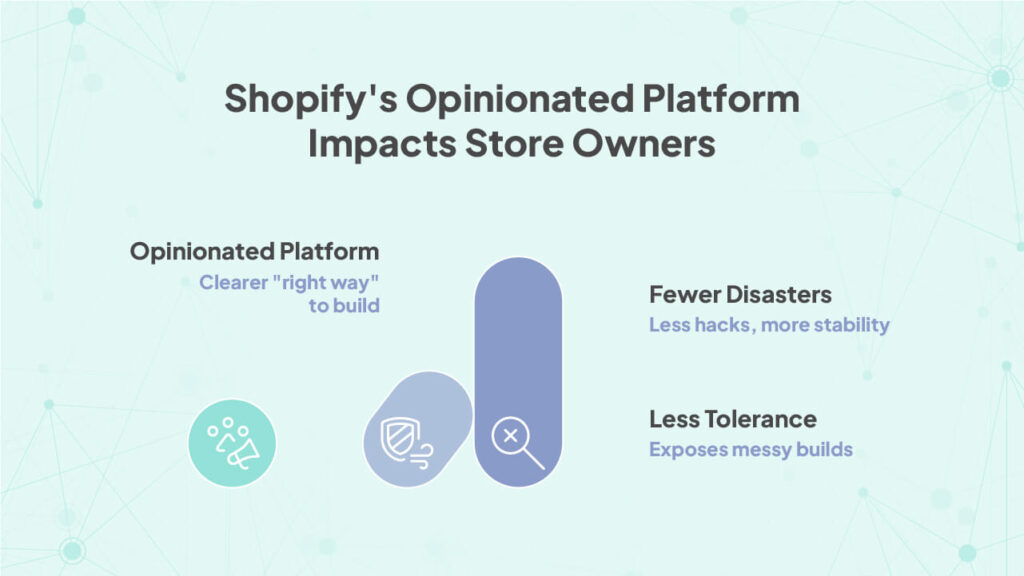
One of the most noticeable things about Winter ’26 is how opinionated Shopify has become. There’s a clearer “right way” to build, customize, and scale on the platform.
In earlier years, Shopify tried to be flexible by letting apps do almost anything. That freedom led to bloated stores, performance issues, and fragile setups where one bad update could break checkout.
Now, Shopify is pulling more logic into the core platform.
Checkout customization is more structured. Performance expectations are stricter. Themes, apps, and extensions are being nudged into cleaner, more predictable patterns.
For store owners, this is a double-edged sword.
On one hand, it means fewer disasters. Fewer hacks. More stability. On the other hand, it means less tolerance for messy builds. If your store relies on outdated apps, heavy scripts, or fragile custom code, Winter ’26 doesn’t quietly ignore that anymore.
It exposes it.
Performance Is No Longer “Nice to Have”
Shopify has talked about speed for years, but Winter ’26 treats performance as a business requirement, not a recommendation.
The platform is more aggressive about enforcing best practices. Themes are expected to be lighter. Scripts are more tightly controlled. Checkout and storefront performance are no longer areas where you can afford to be careless.
This matters because Shopify understands something many store owners still underestimate: performance directly impacts revenue.
Faster pages don’t just feel better they convert better. They reduce bounce rates. They improve SEO. They make paid traffic more profitable.
What Winter ’26 does is remove excuses. If your store is slow, it’s no longer “just how Shopify is.” It’s a sign something in your setup needs attention.
Checkout Is Still Controlled — But It’s Smarter Now
Checkout has always been Shopify’s most controversial area. Store owners want control. Shopify wants stability and conversion consistency.
Winter ’26 doesn’t suddenly unlock full checkout freedom, but it does something more important: it makes the rules clearer.
Customization is now guided through official extension points instead of hacks. You’re encouraged to build within defined boundaries that protect performance and security. While this frustrates some developers, it benefits store owners in the long run.
Why?
Because checkout is where bad ideas do the most damage.
Winter ’26 reinforces Shopify’s stance: you can customize, but not at the cost of speed, reliability, or customer trust. That’s a tradeoff many scaling brands are actually comfortable making.
Shopify Is Leaning Hard Into Automation
Another clear theme of Winter ’26 is automation, not in a flashy “AI replaces everything” way, but in a practical, operational sense.
More processes are becoming easier to automate. More workflows can be handled without stitching together five apps. More insights are surfaced without digging through dashboards.
This isn’t about replacing humans. It’s about reducing manual effort.
For store owners, this matters because operational drag is real. As order volume grows, complexity grows with it. Inventory syncs, fulfillment rules, customer segmentation, reporting these things eat time.
Shopify’s updates point toward a future where the platform quietly handles more of that background work, so teams can focus on growth instead of maintenance.
Shopify Is Clearly Targeting Mid-Market and Enterprise
Winter ’26 sends a strong signal: Shopify doesn’t want to lose serious brands to “enterprise” platforms anymore.
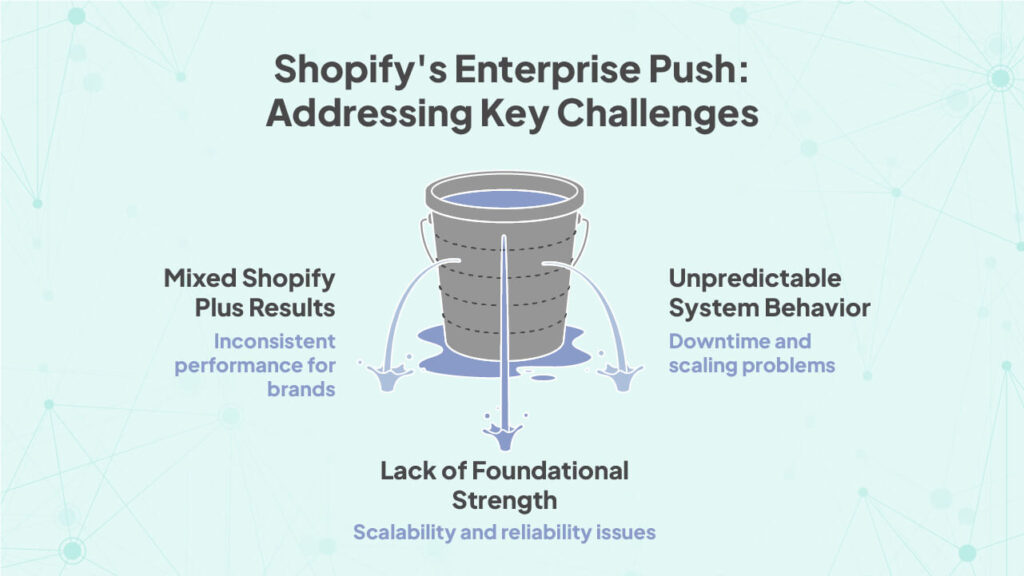
Historically, Shopify Plus tried to bridge that gap, but the reality was mixed. Some brands thrived. Others hit limitations and migrated away.
This edition focuses less on flashy features and more on foundational strength. Scalability, consistency, reliability, and cleaner extensibility.
Shopify seems to understand that enterprise doesn’t mean complicated, it means predictable. Brands want systems that don’t break under pressure. They want upgrades that don’t cause downtime. They want tools that scale without constant firefighting.
Winter ’26 is Shopify saying: we’re building for that now.
What This Means If You’re a Small Store
If you’re running a small or early-stage store, Winter ’26 might not feel dramatic and that’s okay.
Your core experience doesn’t change much. You can still launch quickly. You can still use themes and apps. You’re not suddenly forced into complexity.
What does change is what’s possible if you grow.
You’re building on a platform that’s increasingly designed to support scale. That matters because it reduces future migration risk. You’re less likely to outgrow Shopify as quickly as you might have in the past.
In simple terms: Shopify is becoming a safer long-term bet.
What This Means If You’re a Growing Brand
If your store is already doing serious volume, Winter ’26 should get your attention.
This is the moment to reassess your setup.
Are you relying on too many apps?
Is your theme optimized or patched together?
Are you fighting the platform instead of working with it?
Is your checkout clean and fast, or overloaded?
Shopify’s direction makes one thing clear: clean builds win. Stores that follow Shopify’s recommended architecture will benefit the most. Stores that resist it will feel friction.
This isn’t about Shopify being restrictive. It’s about Shopify choosing consistency over chaos.
What This Means If You’re Considering Migration
If you’re currently on another platform and evaluating Shopify, Winter ’26 strengthens the case but with caveats.
Shopify is not trying to be everything to everyone. It still prioritizes structure over absolute freedom. If your business depends on deeply unconventional workflows, Shopify may still feel limiting.
But if your goal is growth with stability, fewer technical fires, predictable performance, and a platform that evolves without breaking your store, Shopify’s Winter ’26 update makes it a more compelling option than it was a few years ago.
Especially for brands that want to focus on marketing, merchandising, and customer experience rather than infrastructure.
Shopify’s Bigger Bet: Fewer Problems, Not More Features
One of the smartest things about Winter ’26 is what Shopify didn’t do.
It didn’t dump hundreds of half-baked features into the ecosystem. It didn’t radically change how stores operate. It didn’t chase trends just to make headlines.
Instead, it focused on reducing friction.
Fewer performance issues.
Cleaner customization paths.
More predictable upgrades.
Better guardrails.
That’s not exciting in a demo but it’s powerful in real life.
Store owners don’t actually want more features. They want fewer problems.
Winter ’26 understands that.
The Tradeoff Store Owners Need to Accept
There is a tradeoff here, and it’s important to be honest about it.
As Shopify matures, it becomes less tolerant of messy setups. The days of throwing together a store with random apps and hoping for the best are fading.
This means store owners need to be more intentional.
Architecture matters.
App choices matter.
Theme quality matters.
Long-term planning matters.
If you approach Shopify casually, Winter ’26 won’t magically fix that. But if you approach it strategically, the platform rewards you with stability and scale.
Where BrandCrock Fits Into This Picture
At BrandCrock, we don’t see Shopify as a “set it and forget it” platform and Winter ’26 reinforces why.
Shopify works best when it’s treated as a foundation, not a shortcut. The brands that win on Shopify are the ones that make deliberate decisions early, clean up technical debt regularly, and align their store structure with long-term goals.
This update makes that clearer than ever.
If you’re building new, it’s an opportunity to start right.
If you’re scaling, it’s a reminder to clean up what’s holding you back.
If you’re migrating, it’s a signal that Shopify is serious about the long game.
Final Thoughts: This Is Shopify Growing Up
Shopify Winter ’26 isn’t flashy and that’s exactly why it matters.
It’s the update that shows Shopify maturing from a startup-friendly platform into a business-critical one. It prioritizes reliability over novelty. Structure over chaos. Long-term scalability over short-term convenience.
For store owners, the message is simple:
Shopify isn’t just a place to launch anymore.
It’s a place to grow, if you’re willing to build properly.
If you’re rethinking your platform strategy for 2025, Winter ’26 deserves your attention. Not because it promises magic, but because it quietly removes friction where it matters most.
And in eCommerce, that’s what actually moves the needle.


 Vaid Ali
 Sep 28, 2025