


Shopware Integrations and Interfaces for Stable System Landscapes
We develop Shopware integrations for ERP, CRM, PIM, shipping, and payment systems as well as custom third-party solutions – with a clear architecture and stable connectivity.
This results in clean processes, consistent data, and a scalable E-Commerce setup.

Certified Shopware experts for reliable integrations
In modern E-Commerce, the technical challenge rarely lies in the shop alone. What matters is how well Shopware interacts with ERP systems, inventory management, CRM, PIM, shipping, and payment solutions. It is precisely at these interfaces that inconsistencies, manual effort, and error-prone processes often arise.
As certified Shopware partners, we develop integrations that fit cleanly into your system landscape and can be operated reliably over time. Instead of isolated one-off solutions, we create structured connections that ensure consistent data flows, stable processes, and a scalable E-Commerce infrastructure.


Which systems we connect to Shopware
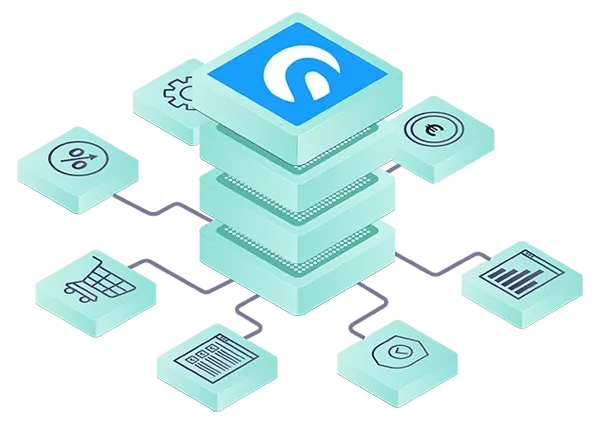
We connect Shopware with the systems already used productively in your company – from ERP and CRM to PIM, shipping, payment, and POS solutions. This creates seamless processes, consistent data, and a technical foundation on which your E-Commerce setup can operate reliably.

ERP and Inventory Management Systems
Connecting Shopware cleanly with ERP and inventory systems is critical. We integrate solutions such as SAP Business One, Microsoft Dynamics 365 Business Central, Sage, Xentral, JTL-Wawi, and Pickware so that orders, inventory levels, pricing, and financial processes remain consistent across systems.

CRM and Customer Data Platforms
We integrate Shopware with CRM systems such as HubSpot, Salesforce, Pipedrive, Zoho CRM, and Microsoft Dynamics 365 CRM so that customer data, order history, and interactions are centrally available for sales, service, and marketing teams.

PIM and Product Data Systems
We connect Shopware with PIM solutions such as Akeneo, Pimcore, Plytix, and Salsify to centrally manage product data, specifications, media, and categories, ensuring consistent and reliable product information across your shop.

Marketplace and Multichannel Integrations
We connect Shopware with marketplaces and multichannel platforms such as Amazon, eBay, OTTO Market, Kaufland, and Google Merchant Center, as well as connectors like magnalister, ensuring consistent product data, inventory, pricing, and order management across all sales channels.

Shipping, Logistics, and Fulfillment Systems
We integrate Shopware with shipping and logistics providers such as DHL, DPD, UPS, GLS, FedEx, Sendcloud, and Shipcloud to ensure structured handling of shipping data, labels, tracking information, and fulfillment processes.

EDI Integrations
We integrate Shopware into existing EDI infrastructures so that orders, invoices, delivery notes, and other business documents are processed automatically and in a structured way, enabling reliable workflows across partners and internal systems.

Payment and Accounting Systems
We connect Shopware with payment providers such as PayPal, Stripe, Klarna, Mollie, Adyen, and Unzer, as well as accounting systems like DATEV and BrandPos, ensuring seamless integration of payment statuses, transaction data, and financial processes.
ERP SystemsInstead of juggling numbers between systems, let them update themselves. Orders, inventory, and finance flow seamlessly between Shopware and your ERP, giving you a clear picture without manual work.
CRM PlatformsEvery customer leaves a trail, such as emails, purchases, chats. When Shopware connects with your CRM, all those dots finally join up. You can spot patterns, respond with intent, and turn one-time buyers into loyal fans.
PIM ToolsKeeping product data aligned shouldn’t be a full-time job. A PIM integration pushes accurate titles, specs, and visuals everywhere they need to go.
Shipping ProvidersA good shipping setup is invisible. Labels print automatically, tracking updates arrive early, and customers receive parcels smoothly.
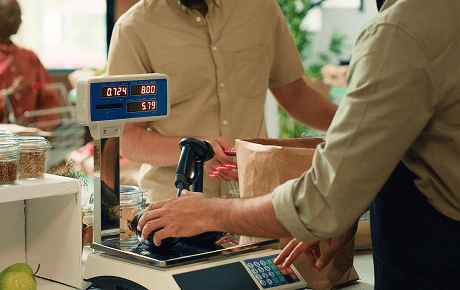
POS SystemsYour store counter and your online shop shouldn’t compete—they should talk. Stock, sales, and returns sync instantly.
EDI ConnectionsSuppliers don’t wait, so why should your data? EDI keeps orders, invoices, and documents moving automatically.

Information security in integration projects
BrandCrock is certified according to ISO/IEC 27001:2022. The certification reflects a structured approach to information security across documented processes, defined responsibilities, and ongoing review.
For clients, partners, and procurement teams, this is a relevant trust signal in projects that involve sensitive information, system access, integrations, or ongoing operational responsibility.
This structured approach is relevant both for client delivery and for proprietary product contexts such as BrandPos. More detail is available on our Security & Compliance page.

Popular Shopware integrations at a glance
Below are integrations that companies in the German market most frequently request.
If your required integration is not listed, we evaluate the technical implementation individually.

DATEV integration
Enables structured transfer of relevant shop data into accounting processes. Financial data, documents, and tax-relevant information are connected cleanly, reducing manual effort.

QuickBooks integration
Supports structured transfer of invoices, payments, and financial data from Shopware, ensuring consistent financial visibility.

Xero integration
Connects accounting and financial processes with Shopware, enabling reliable reconciliation, expense management, and transparency.

Salesforce integration
Combines customer, sales, and order data across systems, creating a strong foundation for CRM processes and sales management.
HubSpot integration
Links marketing, lead, and communication processes with Shopware, enabling better use of customer data and automated campaigns.

PayPal integration
Provides a widely used and reliable payment method while integrating transaction data cleanly into your Shopware setup.

Stripe integration
Enables flexible and modern payment processes directly within Shopware, including international transactions.

Klarna integration
Adds flexible payment options such as invoice purchase or installments, enhancing checkout attractiveness.
Mollie integration
Centralizes multiple payment methods in Shopware, creating flexibility across markets and customer segments.
DHL integration
Supports structured shipping processes, including label generation, tracking, and shipping data integration.

FedEx integration
Enables reliable international shipping and logistics processes with consistent tracking and operational clarity.

UPS integration
Connects Shopware with structured shipping and tracking processes for transparent order fulfillment.

ShipStation integration
Centralizes shipping across multiple carriers, particularly useful for higher volumes and complex fulfillment setups.

Mailchimp integration
Connects Shopware with email marketing processes, enabling targeted campaigns and automated communication.
Klaviyo integration
Transforms customer data and purchase behavior into personalized marketing workflows.
Google Analytics integration
Provides transparency on user behavior, conversion paths, and performance metrics for data-driven decisions.

Google Tag Manager integration
Enables structured management of tracking and marketing tags without direct code intervention.
Integrations for different business models in the German market

B2B commerce requires complex pricing logic, roles, approvals, catalogs, and procurement processes. We integrate Shopware with ERP, CRM, and EDI systems to ensure reliable mapping of orders, conditions, and critical business workflows.

In D2C business models, data quality, speed, and customer retention are key. We connect Shopware with marketing, PIM, shipping, and CRM systems to ensure structured interaction between campaigns, product data, and fulfillment.

For manufacturers, it is essential that Shopware integrates reliably with ERP, MRP, MES, or WMS systems. This ensures that inventory, availability, delivery times, and production-related data are accurately reflected in digital sales.

Companies selling across physical stores, online shops, and marketplaces require consistent data across all channels. We integrate Shopware with POS, PIM, and multichannel systems to synchronize inventory, product data, pricing, and orders.

Wholesale businesses depend on stable processes for pricing logic, bulk orders, invoicing, and partner communication. We integrate Shopware with EDI, debtor logic, B2B portals, and additional third-party systems to ensure reliable order and billing processes.
Our proven integration process


We begin by analyzing your current system landscape and how data flows between Shopware and connected systems. This includes reviewing processes such as orders, inventory, customer data, payment status, and shipping information, as well as identifying dependencies and friction points.
Based on this analysis, we develop a technical integration concept tailored to your setup. This defines how Shopware communicates with ERP, CRM, PIM, shipping, and payment systems, which data flows are required, and which business rules must be considered.
Where standard connectors are insufficient, we develop custom interfaces, middleware solutions, or API integrations tailored to your requirements. This ensures that even complex system landscapes can be integrated reliably.
Before rollout, we test integrations using real-world scenarios, including order processes, inventory synchronization, partial deliveries, refunds, and special cases in shipping and payment logic.
The rollout is carried out in a controlled manner with technical safeguards. We monitor data flows, validate critical processes in the live environment, and implement fallback or rollback strategies to ensure smooth transition into operation.
Results from real Shopware projects
Direct feedback from companies that have worked with BrandCrock on the implementation and further development of their shops.
Enrico Bloch
Nach anfänglichen kleinen Problemen, schneller und freundlicher Support mit schneller Lösung.
Joe Krane
Sent an email and had a response quickly. The next morning the changes were made and it works perfectly.
Argjend Tutaj
The plugin is very easy to install and configure.
Jan Kilian
Sehr schneller und entgegenkommender Support. Eine individuelle Erweiterung konnte umgehend umgesetzt werden.
Chris
Der Support reagiert umgehend auf Feinheiten und setzt diese um.
Lennart S.
Das Plugin erfüllt, was es verspricht. Trotz Theme-Konflikt funktioniert jetzt alles reibungslos.
Frequently Asked Questions About Shopware Integrations
Answers to key questions about Shopware integrations, APIs, system connections, and technical implementation.
Which companies benefit from Shopware integrations?
Businesses with multiple connected systems such as ERP, CRM, PIM, logistics, or marketplaces benefit greatly from Shopware integrations.
How do you ensure reliable integrations?
We begin with a structured analysis of your systems, data flows, and business requirements before implementing and testing integrations.
Can Shopware be integrated with third-party systems?
Yes. Shopware supports integration with ERP, CRM, PIM, payment, shipping, marketing, POS, and EDI systems.
Do you provide support after integration?
Yes. We provide ongoing maintenance, troubleshooting, technical improvements, and support after implementation.
Why choose BrandCrock for Shopware integrations?
We combine deep Shopware expertise with practical ecommerce process experience to build stable and scalable integrations.
Do ERP, PIM, CRM, or marketplaces need to work cleanly with Shopware?
We design and implement Shopware integrations for stable data flows, clear process logic, and fewer operational issues in day-to-day business.