


Shopware 6 Migration from Shopware 5 and Other E-Commerce Systems

We support companies in migrating to Shopware 6

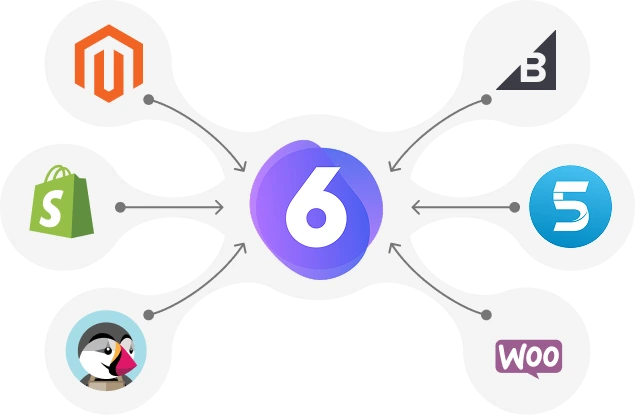
We support companies in migrating from Shopware 5 and other shop systems to Shopware 6 – with clear technical planning, structured data migration, and a controlled go-live process.
This reduces risks, downtime, and friction throughout the migration process.

Shopware Plugins
0 +
Shopware Themes
0 +
Projects
0 +
Years of Experience
0 +
migration-shopware-migration-banner-w635
shopware-extension-partner-brandcrock
shopware-bronze-partner-brandcrock
shopware-certified-designer-brandcrock
shopware-certified-developer-brandcrock

Why a migration to Shopware 6 makes sense

Many companies eventually reach technical or operational limits with their existing shop system. Typical reasons include limited extensibility, growing integration requirements, inflexible processes, or a system that can only be further developed with significant effort.

A migration to Shopware 6 provides a stable and future-proof foundation for further development. The platform offers a modern, extensible architecture, flexible options for custom functionality, and a strong base for SEO, international setups, integrations, and scalable E-Commerce processes.

For companies that want to develop their shop in a technically clean way, securely transfer existing data, and implement the transition in a controlled manner, Shopware 6 is in many cases a viable long-term solution.

What one-time Shopware migration costs may occur

Typical limitations of existing shop systems

tick-icon-brandcrock-w15

Limited extensibility

Even smaller adjustments in the frontend or business processes often require significant development effort or additional plugins.

tick-icon-brandcrock-w15

Restricted pricing and discount logic

Complex pricing rules, customer groups, promotions, or conditional offers are often difficult to implement.

tick-icon-brandcrock-w15

High effort for international setups

Multi-language environments, multiple storefronts, or country-specific requirements often require additional extensions and increase complexity.

tick-icon-brandcrock-w15

SEO only possible to a limited extent

Clean URL structures, redirects, meta data, and technical SEO requirements cannot always be controlled flexibly.

tick-icon-brandcrock-w15

Limited integration capabilities

APIs and standard integrations are often insufficient when processes need to be customized or external systems integrated reliably.

tick-icon-brandcrock-w15

Separation of content and commerce

Content, landing pages, and commerce functionalities are often only loosely connected in many systems.

What Shopware 6 can handle better

tick-icon-brandcrock-w15

Flexible storefront design

With Shopping Experiences and CMS capabilities, content, categories, and sales areas can be structured and managed flexibly.

tick-icon-brandcrock-w15

Rule-based pricing and promotion logic

The Rule Builder supports complex pricing logic, customer segmentation, campaigns, and custom business rules directly within the system.

tick-icon-brandcrock-w15

Multilingual and scalable setups

Shopware 6 provides a solid foundation for international shops, multiple sales channels, and growing business requirements.

tick-icon-brandcrock-w15

Technical basis for clean SEO migrations

Redirects, URL structures, meta data, and other SEO-relevant settings can be systematically integrated into the migration process.

tick-icon-brandcrock-w15

Modern integration capabilities

The API-first architecture provides a reliable foundation for ERP, PIM, CRM, payment integrations, and custom extensions.

tick-icon-brandcrock-w15

Stronger connection between content and commerce

Products, content, and campaigns can be combined more effectively, improving both user experience and marketing performance.

Shopware migration services for a structured transition

We support the migration to Shopware 6 from initial technical evaluation through data, functionality, and integrations, all the way to a controlled go-live. The goal is a clearly structured transition with defined processes, traceable testing, and minimal disruption to ongoing operations.

complete-data-migration

Complete data migration

  • Migration of products, variants, categories, media, customers, and orders

  • Review and structuring of all data to be migrated

  • Validation of migrated data in a staging environment

  • Delta synchronization for new orders and customer data before go-live

  • Clean data transfer with minimal operational interruption

design-theme-development

Design and theme migration

  • Analysis of the existing frontend and relevant design requirements

  • Transfer or redevelopment of a suitable Shopware 6 theme

  • Optimization for desktop, tablet, and mobile devices

  • Setup of central CMS and content pages in Shopware 6

  • Technically stable rendering across all relevant devices

plplugin-extension-setup

Plugins and functional extensions

  • Review of existing plugins, extensions, and custom functionalities

  • Evaluation of which features can be transferred to Shopware 6

  • Recreation of missing functionalities through custom plugin development

  • Setup and testing of all extensions in the staging environment

  • Technical validation before go-live

seo

SEO and URL migration

  • Migration of relevant meta data and SEO structures

  • Setup of redirects for changed URLs

  • Review and configuration of key SEO settings in Shopware 6

  • Updating sitemaps and indexing foundations after go-live

  • Technical measures to preserve existing visibility

custom-feature

Custom features and business logic

  • Analysis of existing custom logic and business requirements

  • Transfer of business-critical rules into Shopware 6

  • Mapping of individual processes, roles, pricing logic, or approval workflows

  • Validation based on real use cases and test scenarios

  • Ensuring that critical functions are reliably implemented in the new system

payment

Integrations and payment methods

  • Analysis of all existing system integrations and dependencies

  • Integration of ERP, PIM, CRM, and third-party systems

  • Setup of relevant payment methods and shipping options

  • Technical validation of interfaces, data flows, and process logic

  • Clean integration into the existing E-Commerce ecosystem

testing

Testing and quality assurance

  • Structured test plan before go-live

  • Validation of migrated data for completeness and consistency

  • Testing of frontend, responsiveness, and browser compatibility

  • Testing of checkout, emails, payments, and shipping logic

  • Validation of critical business processes before launch

llive

Go-live and delta synchronization

  • Go-live planning with clearly defined technical steps

  • Final data synchronization before switching systems

  • Launch in a controlled time window with minimal risk

  • Monitoring of orders, payments, and technical stability

  • Support during the initial phase after go-live

Our Shopware 6 migration process

service

Preparation phase

At the beginning, we analyze the existing shop, relevant data structures, implemented plugins, integrations, and key business processes. Based on this, we create a structured migration plan with clear milestones, defined checkpoints, and a fallback option for go-live.

service

Migration phase

We then migrate data into a staging environment that realistically reflects the future live setup. Products, variants, categories, media, customers, orders, and business logic are checked for completeness and technical consistency.

service

Validation phase

In the next step, we test key functionalities such as checkout, payments, shipping, frontend behavior, content, and core processes. We also review data quality, performance, SEO foundations, responsiveness, and browser compatibility.

service

Go-live phase

Before go-live, we perform the final synchronization and support the system switch with clearly defined technical procedures. After launch, we monitor orders, payments, and shop stability and support the initial post-launch phase.

What we handle as part of a Shopware migration

We migrate existing shop systems to Shopware 6 in a structured way, including not only the shop itself but also relevant data, content, and core E-Commerce processes. The source system, functionality, and technical complexity are carefully assessed in advance.

Regardless of which system you are migrating from, we plan the migration in a technically sound way tailored to your starting point.

Products and variants

Categories and subcategories

Customers and full order history

Product images and media

Reviews and promotions

Tax rules and shipping options

Why BrandCrock for your Shopware migration

80K+

80K+ products migrated

Large product catalogs with variants, categories, and media can be structured and validated thoroughly before go-live.

95%+

95%+ SEO visibility preserved as much as possible

With a structured URL migration, redirect concept, and technical SEO validation, we reduce the risk of unnecessary visibility loss after launch.

40%

40% performance improvement after migration

Through technical cleanup, modern frontend implementation, and optimized processes, we create a better foundation for loading speed, UX, and conversion.

100K+

100K+ customer records migrated

Customer data, order histories, and critical shop data are migrated in a structured way to preserve business continuity.

6+

6+ core business systems integrated

We integrate ERP, PIM, CRM, payment, and shipping systems so that processes and data flows continue to function reliably after migration.

10+
Years

10+ years of experience in the Shopware ecosystem

Our experience from numerous Shopware projects helps identify migration risks early and implement technically sound solutions in a structured way.

Frequently asked questions about Shopware migration

Are there downtimes on the day of go-live?

We plan go-live to minimize downtime as much as possible. This includes final synchronization, a clearly defined switch window, and technical fallback options. With proper preparation, customer impact can often be significantly reduced.

A migration can affect rankings if URL structures, redirects, meta data, or technical SEO foundations are not properly implemented. That is why we review critical pages, implement redirects, and support SEO-related aspects after go-live to minimize visibility loss.

Yes. Depending on the source system, we migrate customer accounts, orders, order history, and other relevant shop data into the new Shopware 6 environment. The exact scope is evaluated in advance.

Yes. We review existing plugins, custom extensions, and specific business logic in your current system and evaluate which functionalities can be transferred, replaced, or redeveloped in Shopware 6.

After go-live, we support stabilization, bug fixing, performance optimization, SEO validation, and further technical development. This support can be structured as a defined hypercare phase or as ongoing support and maintenance packages.

Scroll to Top